
The French dinner has a form, and the form is older than any of us. It is long, it is seated, it is punctuated, and it assumes that the point of the evening is the conversation rather than the food. Everything about a table can either support that assumption or quietly work against it.
Length is a decision, not an accident
A dinner that runs three hours is not three times a dinner that runs one. Somewhere around the second hour, a table stops being an audience and becomes a group. Getting there requires the courage to leave gaps: a pause between courses, a moment when nothing is being served and nobody is speaking into a microphone.
What the table has to do
Seat height and table width decide whether people can hear each other. Sixty-five centimetres between guests is polite; seventy-five is generous; anything less turns dinner into an endurance test. A table wider than a metre and a half makes conversation across it impossible, which is sometimes exactly what you want and usually not.
A beautiful table that cannot be spoken across has solved the wrong problem.
Light, and the hour it changes
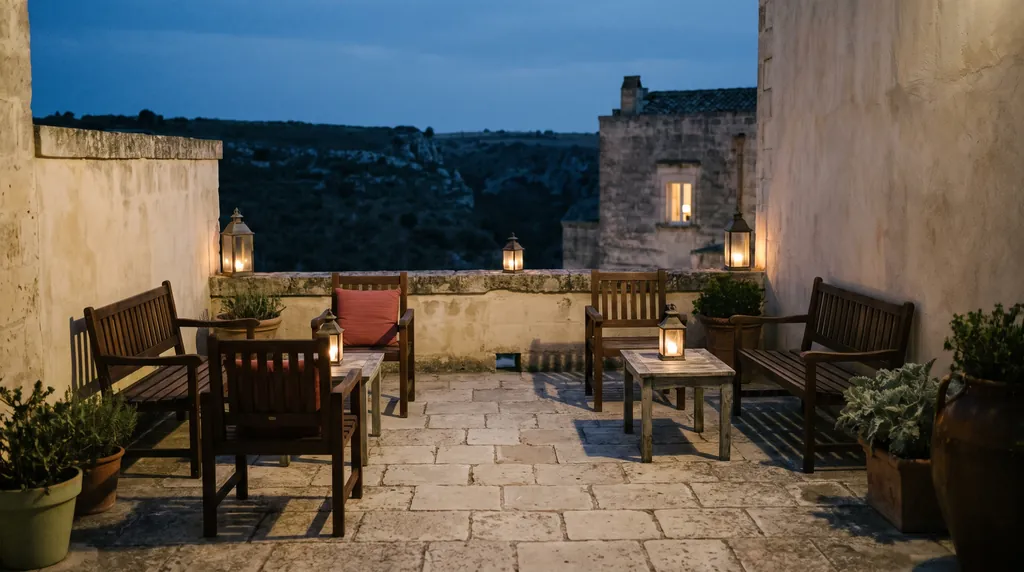
The single most reliable way to make a dinner feel remarkable is to sit down while the sun is still up and let the light fall during the meal. Candles that are lit at the start read as decoration. Candles that become the only light source halfway through read as magic, because the room changes while nobody is watching.
Serving, and the shape it gives
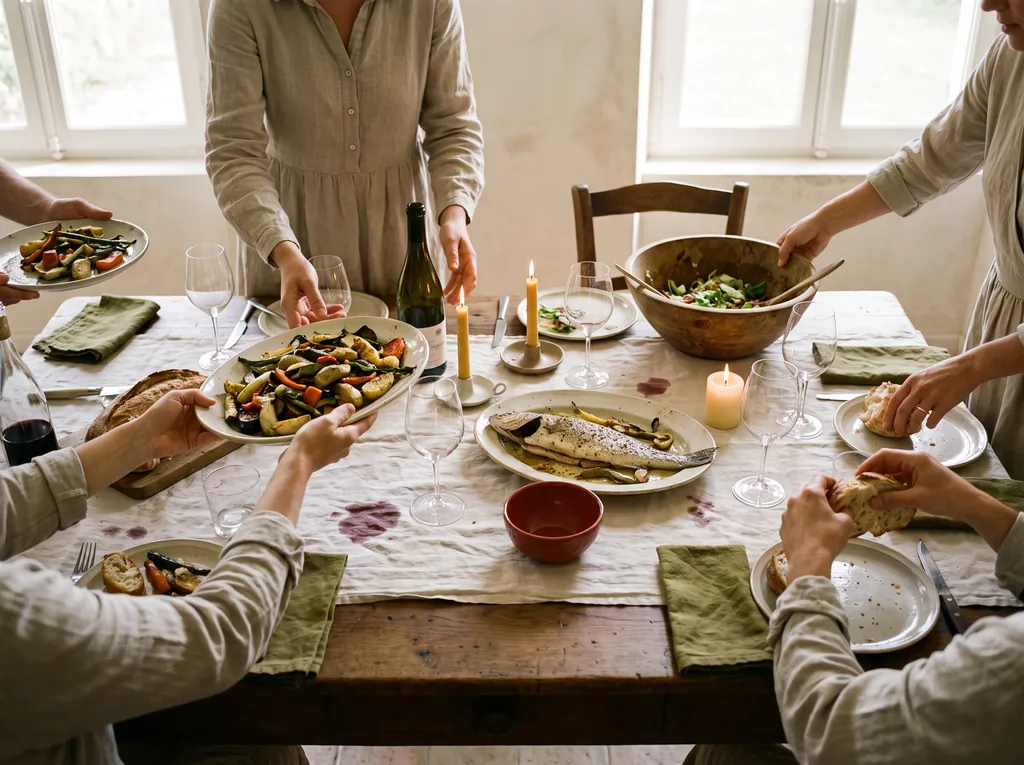
Plated service is precise and fast. Sharing platters are slower, messier and far better at making strangers speak, because passing a dish is a small act of hospitality repeated forty times an evening. Most of our menus use both: precision where it protects the kitchen, sharing where it builds the room.
What to leave off
Runners that stop people from putting down a glass. Arrangements taller than a seated eye line. Menu cards that require reading glasses at candlelight. Every one of them is a small tax on the evening, paid by the guests.
- Jean Anthelme Brillat-Savarin, The Physiology of Taste, 1825.
- Elisabeth Luard, The Old World Kitchen, on regional French table customs.
- Richard Kelly's three-part theory of light, cited in Architectural Lighting Design, Routledge.